Marnitz Jankowitz aka Tizzy and his family recently holidayed in Japan! 
Surveying may be a universal profession, but every country has its own way of marking and managing land. During a recent visit to Japan, we couldn’t help but admire the attention to detail that goes into their surveying infrastructure.
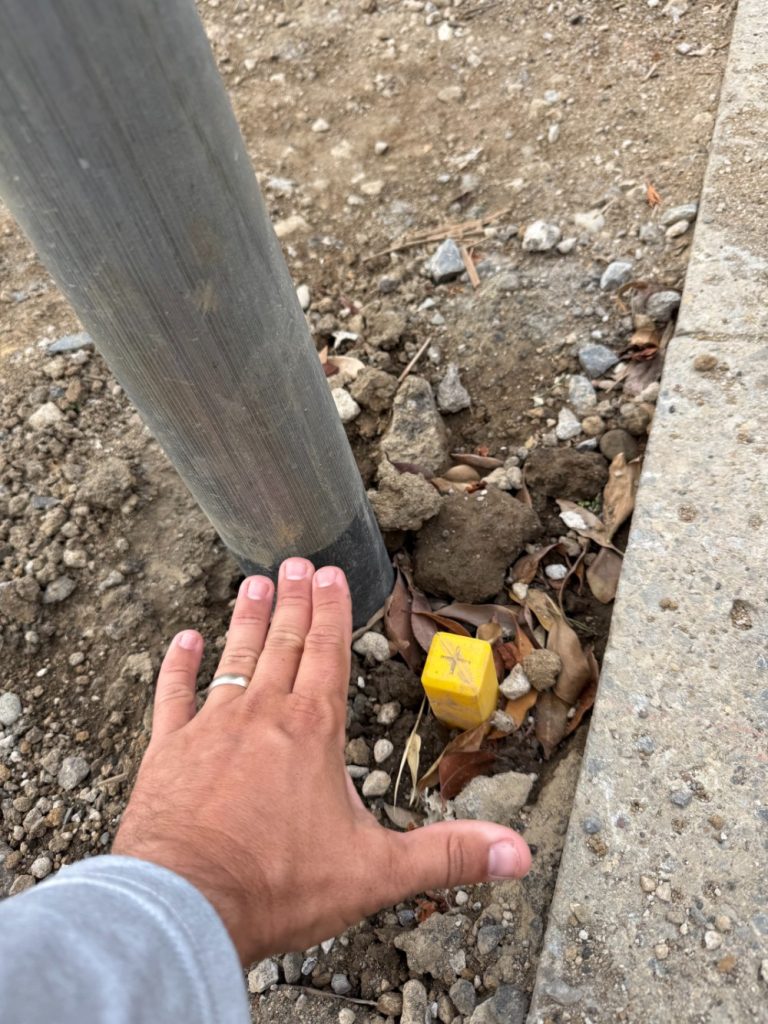
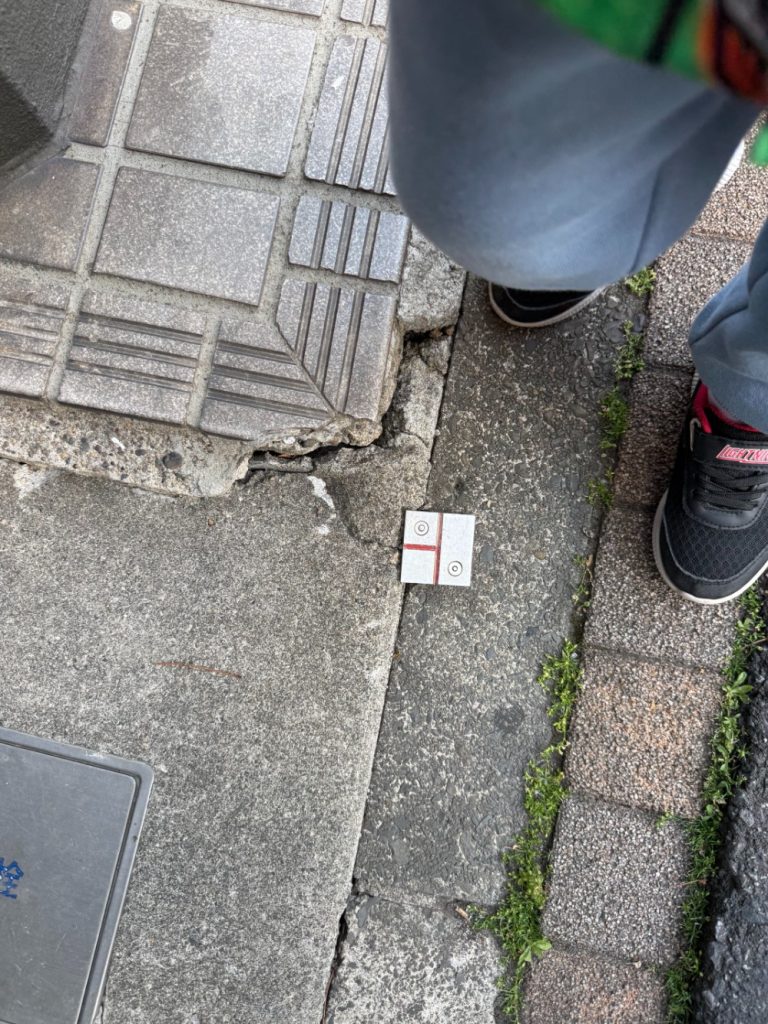
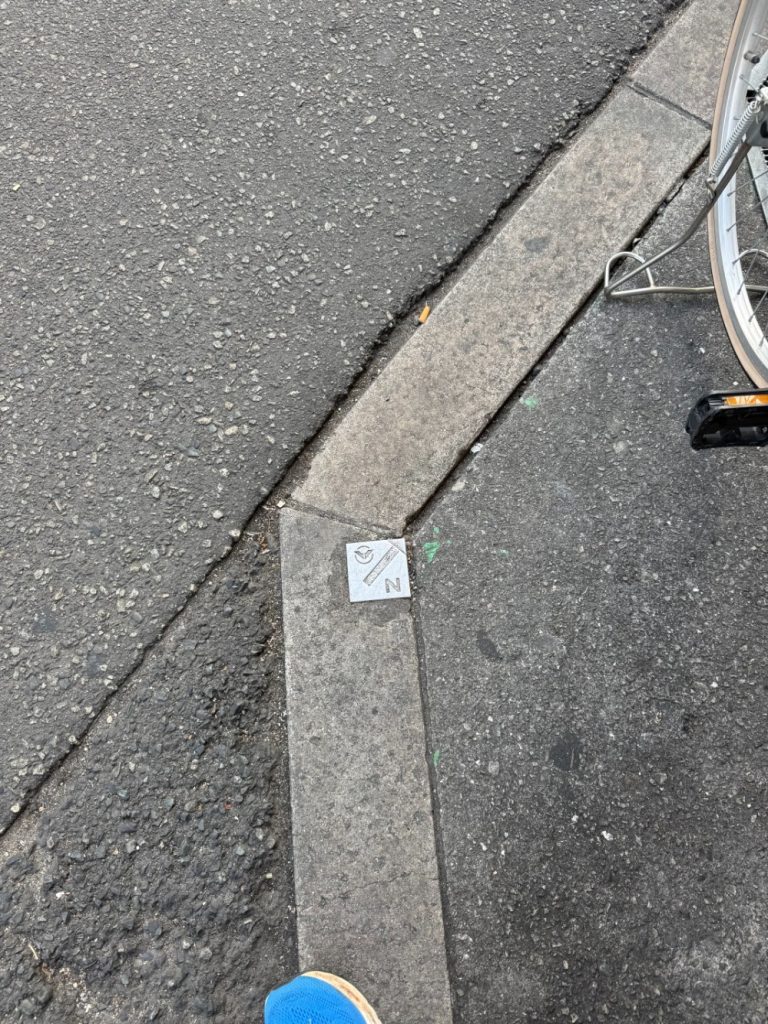
One of the first things you’ll notice is that Japan uses a combination of exact point marks cast directly into concrete and offset reference marks, often shown with arrows, to identify land parcel boundaries. This system makes it easier to preserve important survey marks while still allowing surveyors to accurately locate boundary points, even when the original mark isn’t directly accessible.
Japan also appears to use a well-structured hierarchy of survey control points, with different classes of marks serving different purposes. These range from local set-out points through to higher-order control used for mapping and engineering projects, creating a reliable framework for accurate surveying across the country.
What really stands out is the variety—and quality—of the survey monuments themselves. From simple screws and concrete nails with colour-coded rings through to beautifully crafted polished brass domes engraved with precise reference marks, there’s a real appreciation for durability, function and presentation.
While the technology behind surveying continues to evolve around the world, it’s fascinating to see how different countries approach the fundamentals of marking and protecting survey control. Japan’s system is a great example of combining practical design with exceptional precision—qualities that surveyors everywhere can appreciate.